
How to Actually See the Northern Lights: 6 Arctic Experiences That Make the Wait Worth

Nobody can promise you the Northern Lights. Not a tour operator, not a luxury lodge, and not us. The aurora does not keep appointments. It needs a dark sky, a clear sky and a restless sun, and on any given night at least one of those may refuse to cooperate. That is the part the brochures leave out. What we can promise is that the waiting does not have to be wasted. The travelers who come home happiest are rarely the ones who simply got lucky. They are the ones who stacked the odds sensibly, and who chose Arctic experiences so good that a cloudy night still felt like the point of the trip. This is a guide to both: how the odds really work in the 2026–27 season, and six experiences that make the wait worth it.
The Honest Odds: What Actually Decides Whether You See Them

Three things have to line up:
Darkness: The aurora is there all year, but you can only see it when the sky is properly dark. The 2026–27 season runs from late September to late March, and the days around each new moon give the darkest skies. The ones still ahead of us are roughly 9 November and 9 December 2026, then 7 January, 6 February and 8 March 2027 (give or take three days).
Clear sky: This is the factor that decides most trips, and the one nobody can forecast more than a day or two out. Interestingly, the darkest months are not always the clearest. Cloud statistics for several Arctic towns suggest September and March often beat midwinter, which is one reason experienced aurora travellers love those shoulder months, and why they are usually cheaper too.
Solar activity: Solar Cycle 25 reached its maximum around October 2024, so 2026–27 sits in the early declining phase. That is still very good news: the first few years after a solar maximum tend to keep producing strong geomagnetic storms, because big displays lag sunspot numbers by a couple of years. The activity will fade gradually over the coming years, so there is no reward for waiting.
The practical rule: stay at least four to five nights, so one cloudy night cannot end your trip, and where possible split the stay between two bases. Two locations means two different weather systems working in your favour.
1. Sleep Beneath the Sky: A Glass Igloo in Finnish Lapland
Where: Saariselkä and Inari, Finnish Lapland (also Levi and Rovaniemi) | Sweet spot: late September to March
The idea is almost absurdly simple: a heated cabin with a roof of thermal glass, and a bed positioned so you can watch the sky from under a duvet while it is minus twenty outside.
Kakslauttanen, near Saariselkä and roughly 250 kilometres north of the Arctic Circle, is the resort most people picture, the original glass igloo village, set in forest far from any town's glow. Resorts like this run an aurora alarm: if the lights appear while you sleep, you get woken up. Many also have a private sauna in the cabin, which makes an excellent waiting room between alerts.

What to know: a glass igloo gives you a front-row seat, but it cannot make an aurora appear. If the sky is cloudy, you will see cloud. There is usually no refund or compensation either, so book it as one night of a longer stay rather than your only bet. Indicative rates for 2026–27 run from about €200 for a simple aurora cabin in low season to €800–1,000 or more for a premium glass igloo at peak. The thermal glass is built to stay clear in frost, though no system is entirely immune to fogging.
Best for: honeymooners, milestone anniversaries, and anyone who wants the lights to arrive as a surprise at 2am.
2. Go and Find Them: A Guided Chase from Tromsø, Norway
Where: Tromsø, Norway | Sweet spot: September–October and February–March for clearer skies; November–January for deep polar-night darkness
Tromsø sits at about 69°N, directly under the auroral oval, which is why even a modest bout of solar activity can light the sky. From late November to mid-January the sun stays below the horizon altogether.
The city's secret weapon is its guides. You do not wait in the car park; you ride out in a small group with someone who watches the cloud maps all evening and drives to wherever the sky is breaking, sometimes across a national border. Standing on a frozen fjord shore at midnight, with a guide handing round hot chocolate while the sky begins to move, is exactly the kind of evening that makes a long journey feel justified.

What to know: December is the busiest and most expensive month, and by some measures not the clearest. If your dates are flexible, February or March gives you longer days for fjord and whale-season activities and often better odds of a clear night. Book a chase early in your stay so that you have spare nights if it is cancelled for cloud.
Best for: active travellers who would rather go to the aurora than wait for it.
3. Climb Above the Clouds: The Aurora Sky Station, Abisko, Sweden
Where: Abisko National Park, Swedish Lapland | Sweet spot: mid-November to mid-March (the station's own guidance)
Abisko owes its reputation to a quirk of geography. The mountains around Lake Torneträsk create a rain shadow, producing a patch of unusually clear sky known as the "blue hole," often clear when the surrounding region is clouded over.
A chairlift carries you up Mount Njullá (Nuolja) to the Aurora Sky Station, above the tree line and far from any light. The ride takes about twenty minutes and ends at a warm station with a café, an observation deck, an aurora exhibition and, on dinner evenings, a proper meal. You step outside when the sky wakes up and slip back in when your fingers have had enough.

What to know: Abisko is reachable by train on the Arctic railway north of Stockholm, which makes the journey part of the story. The chairlift visit is booked separately from your stay, and it fills in peak season. Pair it with a few nights at the mountain station hotel at the base.
Best for: travelers who value odds over spectacle, and photographers.
4. Let the Coast Come to You: A Norwegian Coastal Voyage
Where: Bergen to Kirkenes and back, along the Norwegian coast | Sweet spot: late September to March
There is a particular quiet to watching the aurora from the deck of a ship: dark water, no light pollution, mountains sliding past, and the sky doing something unreal above the wake. The classic Hurtigruten coastal voyage runs the length of Norway, calling at dozens of small ports on the way to Kirkenes near the Russian border.
Hurtigruten also offers its Northern Lights Promise. On qualifying voyages of 11 days or more between 20 September and 31 March, if the lights do not occur during your sailing, you receive a free 6- or 7-day Coastal Express voyage. It is a genuinely unusual commitment in this industry.

What to know: the promise is conditional. It applies to qualifying sailings, the ship's own aurora alert system and log decide whether the lights occurred, and the free voyage has to be redeemed within a set period. Read the current terms before you book. The round voyage is long (around 12 days), so it suits travelers with time and a taste for slow travel.
Best for: slow travelers, couples and anyone who wants the Arctic coast as well as the aurora.
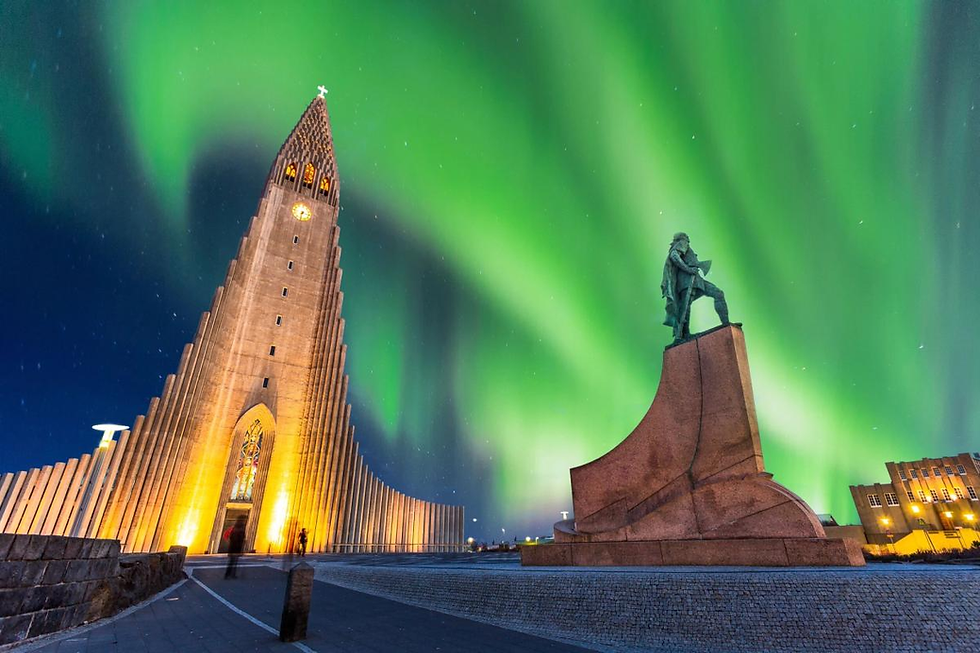
5. Soak Under the Lights: A Geothermal Night in Iceland
Where: South Iceland (Hotel Rangá), Blue Lagoon region, Golden Circle | Sweet spot: September to March
Iceland is the easiest Arctic destination to reach and the most dramatic landscape on this list, but be honest about the trade-off: Reykjavik sits at around 64°N, well south of Tromsø or Abisko, and its weather is changeable. Treat the aurora as a bonus rather than the whole plan, and the country rewards you handsomely either way.
Hotel Rangá, in the countryside near Hella, has built its identity around the lights. It offers an aurora wake-up call, riverside outdoor hot tubs under a very dark sky, and an on-site observatory. Sinking into hot water with snow around you and a green glow overhead is hard to beat.

What to know: pick a rural base rather than Reykjavik for aurora nights, hire a car so you can drive towards clear skies, and allow a week. We have written about the country's most extraordinary hotels in a separate guide.
Best for: first-timers who want waterfalls, glaciers and geothermal water alongside a chance at the aurora.
Also Read: The Most Extraordinary Hotels in Iceland
6. Let the Silence Do the Work: Husky or Reindeer Sledding in Lapland
Where: Rovaniemi, Levi, Saariselkä | Sweet spot: December to March for reliable snow
This is the experience that makes the waiting itself the point. You ride out through a snowy forest, behind a team of huskies or a single reindeer, and the only sounds are runners on snow and breathing animals. Operators run evening safaris timed for dusk and darkness, and on a good night the aurora simply arrives above the trees while you are already deep inside a moment you would have paid for anyway.

What to know: reindeer sledge safaris are a gentler, more cultural option; Sámi herders still tend reindeer here. Husky safaris are livelier. Thermal clothing is normally provided by operators, but check before you go. Combine this with a glass igloo night for the full Finnish Lapland rhythm.
Best for: families, couples, and anyone for whom the journey matters as much as the destination.
Which Experience Is Right for You?
If you want... | Choose | Why |
Waking to the lights in a warm bed | Glass igloo, Finnish Lapland | The aurora alarm does the watching for you |
The best active chase | Tromsø, Norway | Expert guides follow the clear sky |
The best odds of clear skies | Abisko, Sweden | The blue hole microclimate |
A slow, scenic journey | Norwegian coastal voyage | Aurora from the deck, plus the fjords |
Aurora plus waterfalls and glaciers | Iceland | The easiest Arctic landscape to reach |
A moment you will never forget even without lights | Husky or reindeer safari | The experience stands on its own |
Planning It From India
Visa. Finland, Sweden, Norway and Iceland are all in the Schengen Area, so Indian passport holders need a Schengen Type C visa. The fee is €90 for adults, applications go through VFS Global, and you should apply 4–6 weeks before travel (earlier for December and Christmas dates). Apply to the country where you will spend the most nights. One visa covers all four.
Flights. Most itineraries route through Helsinki for Finnish Lapland, or Oslo or Stockholm for Tromsø and Abisko, with a short domestic hop north. Expect roughly 9–11 hours to Helsinki plus another hour or so to Lapland, depending on routing and season.
Budget. As an indicative guide, a well-built 6–8 night Lapland-focused trip from India typically lands between ₹2.5 lakh and ₹4 lakh per person, including flights (roughly ₹45,000–90,000), visa, accommodation, transfers and a few aurora experiences. Glass igloo nights, Christmas week and multi-country routes push it higher. September, October and March are usually better value than December.
What to wear. Temperatures can fall to minus twenty or lower. Layer: thermal base, insulating mid-layer, a proper winter coat, insulated boots, gloves under mittens and a warm hat. Phone and camera batteries drain quickly in the cold, so keep spares inside your jacket.
Five Rules for Waiting Well
1. Give it four to five nights. One night is a gamble; five is a plan.
2. Check the cloud forecast, not only the aurora forecast. A strong forecast under cloud is worth less than a modest one under clear sky.
3. Get away from light. Even a small town's glow can wash out a faint aurora.
4. Be ready to move. Choose a base, a guide or a lodge that lets you chase a clear sky.
5. Plan the day as well as the night. The best Arctic trips are full of reasons to be there that have nothing to do with the sky.
The TBT Perspective

The Northern Lights are the headline, but they are rarely the whole story. Ask anyone who has been what they remember, and they will tell you about the silence, the cold on their face, the strange intimacy of strangers standing in the dark waiting for the same thing. The lights are the reason you go. The waiting is what you bring home.
At The Blueberry Trails, we design Arctic journeys around that idea: two bases instead of one, shoulder-month dates where they give you better odds, and at least one experience that would be unforgettable even under cloud.
Frequently Asked Questions
Can anyone guarantee I will see the Northern Lights? No. Cloud cover and solar activity cannot be controlled, and igloo resorts and tour operators generally offer no compensation if the lights do not appear. Hurtigruten's Northern Lights Promise on qualifying long voyages is the notable exception, subject to its terms. Staying four to five nights is the most reliable way to improve your odds.
What is the best time to see the Northern Lights in 2026–27? Late September to late March. November to February is darkest, but September and March often bring clearer skies. Aim for the days around the new moon.
Is it too late now that the solar maximum has passed? No. The solar maximum was around October 2024, and the first few years afterwards still produce strong displays. Activity will fade gradually, so there is no benefit in waiting.
Where is the best place to see them? There is no single answer because cloud varies. Abisko is known for its clear-sky blue hole, Finnish Lapland for dark skies and glass igloos, Tromsø for guided chasing and Iceland for landscape plus geothermal water.
Do Indians need a visa? Yes, a Schengen Type C visa (€90) via VFS Global covers Finland, Sweden, Norway and Iceland.
How much does it cost from India? Indicatively ₹2.5–4 lakh per person for 6–8 nights including flights, with higher totals for glass igloos, December dates and multi-country routes.
Plan Your Northern Lights Journey With The Blueberry Trails
If the aurora has been on your list, 2026–27 is a very good season to go. Tell us when you can travel and what kind of waiting you would enjoy, and we will build an itinerary with the right bases, the right month and the right backup plan for cloudy nights.
→ [Get in Touch to Plan Your Northern Lights Journey] → [Read: Rare Dining Experiences Worth Flying For] → [Read: Iceland Travel Guide 2026] → [Read: The Most Extraordinary Hotels in Iceland]
The Blueberry Trails is a Mumbai-based curated travel company designing international holiday packages for Indian travellers from Mumbai, Delhi and Bengaluru. Every journey is built around the experience — not the other way around. bookings@theblueberrytrails.com | +91 91672 01907


Comments