
Iceland Travel Guide 2026: The Complete Guide for Indian Travellers
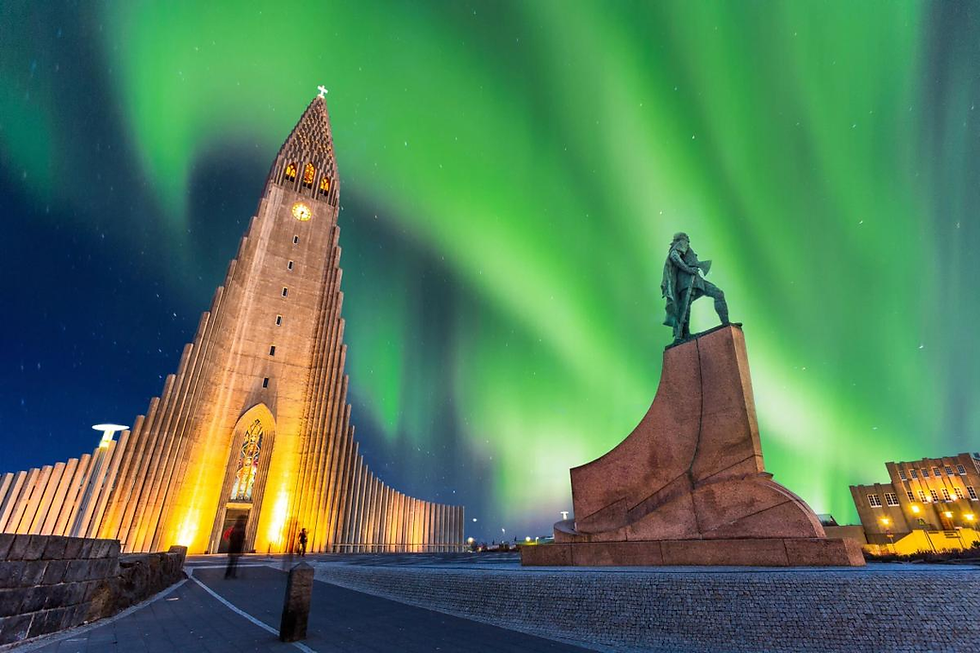
There is a moment that happens to almost every traveller in Iceland — usually somewhere unexpected. Not at the Blue Lagoon or the Golden Circle or in front of a waterfall, although all of those are extraordinary. The moment tends to happen on a dark road in the middle of nowhere, when the engine is switched off and the sky above begins to move.
Green first. Then a shimmer of violet. Then something that has no name in any language, rolling and folding across the entire sky like the universe briefly deciding to show you what it looks like from the inside.
That is Iceland.
In 2026, there has never been a better time for Indian travellers to experience it. Solar Cycle 25 is currently near its peak — the strongest aurora activity in eleven years — meaning Northern Lights are visible earlier in the season, on more nights, and even during periods that are typically marginal. If you have been waiting for the right year to chase the aurora, this is it.
This is the complete 2026 guide for Indian travellers planning an Iceland holiday — from visa and flights to the Golden Circle, the South Coast, the glaciers, the food, the cost, and everything in between.
Why Iceland in 2026?
Iceland sits at the intersection of fire and ice — a volcanic island still being actively shaped by the forces beneath it, where geysers erupt on schedule, glaciers calve icebergs into still lagoons, lava fields stretch to the horizon, and waterfalls fall from cliffs that look like they belong on another planet.
It is also, as any traveller who has been will tell you, completely unlike anywhere else.
The country has been on the radar of Indian travellers for several years — first as a bucket-list aurora destination, then as the dramatic backdrop of everything from Hollywood productions to Bollywood sequences. In 2026, the combination of exceptional solar activity, improving flight connections from India, and a Schengen visa system that has become more accessible makes this the ideal year to go.
2026 also marks the continuing peak of Solar Cycle 25 — the most active auroral period since 2015. Travellers who visit between September and March stand an excellent chance of witnessing one of the natural world's most breathtaking phenomena. The cycle will begin declining after 2026, and the next comparable peak is not expected until the mid-2030s.
Iceland Visa for Indian Travellers: Everything You Need to Know
Iceland is a member of the Schengen Area — which means Indian passport holders require a Schengen Type C short-stay visa before travel. There is no visa on arrival or e-visa option for Indian passports.
The Schengen Tourist Visa (Type C):
Valid for up to 90 days within any 180-day period
Covers all 27 Schengen member countries — combine Iceland with a stopover in Frankfurt, Helsinki, or Copenhagen on a single visa
Fee: EUR 90 for adults (~₹8,100), EUR 45 for children aged 6–11
Processing time: typically 10–15 working days; apply 4–6 weeks before travel
Iceland has one of the highest Schengen visa approval rates for Indian applicants
Apply through VFS Global, Iceland's official visa partner in India. Centres are available in Mumbai, Delhi, Bengaluru, Chennai, Hyderabad, Kolkata, Ahmedabad, Goa, Chandigarh, Jaipur, Kochi, Pune, Jalandhar, and Puducherry. Book your appointment online through the VFS Global India portal.
Documents required:
Valid Indian passport (at least 3 months validity beyond intended stay; minimum 2 blank pages)
Completed Schengen visa application form
Recent passport-sized photographs (Schengen specifications)
Return flight bookings and hotel / accommodation confirmations
Travel insurance: minimum EUR 30,000 coverage valid across the entire Schengen Area for the full duration of stay
Bank statements (last 3 months) — must show at least EUR 28.83 per day of stay plus EUR 144.13 per entry
Employment proof: employer's letter with approved leave, salary slips, or ITR for self-employed applicants
Important note on ETIAS: ETIAS (European Travel Information and Authorisation System) is expected to launch in late 2026. Indian passport holders who require a Schengen visa are NOT affected by ETIAS — it applies only to visa-exempt nationalities. Do not confuse the two.
At The Blueberry Trails, complete visa documentation guidance and checklist support are included with every Iceland itinerary we design.
Also Read: The Most Extraordinary Hotels in Iceland
Getting to Iceland from India: Flights
Iceland's only international gateway is Keflavik International Airport (KEF), located approximately 50 kilometres south-west of Reykjavik.
Note on the airport transfer: Keflavik is not Reykjavik — a 50km gap separates them. Pre-book the Flybus or Gray Line shuttle (approximately ₹2,500 one way) from the airport to your Reykjavik accommodation. Taxis cost ₹12,000–₹15,000 and are not recommended for this route.
From India, the main routing options are:
Via Frankfurt (Lufthansa): The most popular option from Delhi, Mumbai, and Bengaluru. Lufthansa runs multiple daily connections to Keflavik via Frankfurt with short layovers.
Via Helsinki (Finnair): Excellent option from Delhi and Mumbai; slightly lower fares in shoulder seasons.
Via London (British Airways / Icelandair): Typically the most expensive option but with more flight times.
Via Copenhagen or Amsterdam: Good for travellers combining a Scandinavian stopover.
Return economy flight estimates (2026):
Departure | Shoulder Season (Sep, Nov, May) | Peak (Dec–Jan, Jul) |
Delhi (DEL) | ₹42,000 – ₹65,000 | ₹70,000 – ₹1,00,000 |
Mumbai (BOM) | ₹50,000 – ₹75,000 | ₹78,000 – ₹1,10,000 |
Bengaluru (BLR) | ₹55,000 – ₹82,000 | ₹82,000 – ₹1,15,000 |
TBT tip: Booking 90–120 days in advance consistently finds the best fares. A Tuesday or Wednesday departure often runs ₹8,000–₹18,000 cheaper than weekend bookings on the same route. Adding a 2–3 day stopover in Frankfurt or Helsinki costs almost nothing extra on a multi-city ticket and gives you a European city alongside Iceland on a single Schengen visa.
Best Time to Visit Iceland from India
Iceland is genuinely a year-round destination — but what you want to experience determines entirely when you should go.
For the Northern Lights: September to March Aurora visibility requires dark skies — Iceland's long summer days (with the midnight sun in June–July) mean the Northern Lights are invisible in summer, even when auroral activity is high. The aurora season runs late September to late March. November through February offers the longest dark windows and the best chances on clear nights.
In 2026, Solar Cycle 25 remains near its peak. Aurora activity is at its strongest in eleven years — visible earlier in the season (from mid-September), stronger on active nights, and occurring more frequently even during typically quieter periods. Use Vedur.is (Iceland's official meteorological office) to check daily aurora forecasts and cloud cover during your trip.
For Summer Adventures: June to August Iceland in summer is a completely different country. The midnight sun creates 24-hour daylight in June and July — waterfalls at their most powerful, wildflowers across the lava fields, puffins nesting on coastal cliffs, whale watching at its peak, and hikes across glaciers in full light. This is also peak tourist season with the highest accommodation prices.
Shoulder Seasons: May and September The sweet spot for many travellers. May brings increasing daylight, blooming landscapes, and significantly lower prices than summer. September offers the first real aurora chances of the season alongside autumn colours, comfortable temperatures, and fewer crowds than peak summer. September is widely considered the best single month for a balanced Iceland itinerary.
Season | When | What You Get | Consideration |
Aurora Season | Sep–Mar | Northern Lights, snow landscapes, glaciers | Cold; some highland roads closed |
Summer | Jun–Aug | Midnight sun, wildlife, waterfalls at peak | Highest prices; no aurora visible |
Spring | Apr–May | Improving light, lower costs, puffins arrive | Variable weather |
Best Overall | September | Aurora begins + summer still fading | Book early — sells out |
Where to Go: Iceland's Essential Destinations
Reykjavik — A Capital Unlike Any Other

Reykjavik is the world's northernmost capital city — a compact, walkable, and surprisingly colourful place built on volcanic rock at the edge of the North Atlantic. It is small enough to explore completely on foot, yet dense enough in culture, restaurants, and character to warrant two or three days of genuine attention.
The city's most recognisable landmark is Hallgrimskirkja — a 74.5-metre Lutheran church whose concrete spire rises above the entire city and is visible from the sea. The viewing platform offers a panoramic sweep of Reykjavik's colourful rooftops, the harbour, and on clear days, the volcanic peaks on the mainland.
The old harbour district (Grandi) is where Reykjavik has been reinventing itself — converted warehouses now house contemporary restaurants, craft breweries, the Whales of Iceland exhibition, and the Reykjavik Street Food market. The Harpa Concert Hall, a striking geometric glass building on the waterfront, designed by Olafur Eliasson, is worth entering even if you have no event to attend.
Experiences not to miss:
Hallgrimskirkja — climb the tower, walk the surrounding neighbourhood of painted houses
Harpa Concert Hall — the interior is as dramatic as the exterior; free to enter
Tjornin Pond — a small lake in the city centre, surrounded by government buildings and home to dozens of seabird species
The Whales of Iceland — life-scale models of 23 whale species; a genuinely impressive exhibition, particularly if you plan to whale watch in Husavik
Laugavegur Shopping Street — Reykjavik's main commercial street for Icelandic wool sweaters, handmade ceramics, and local design
Evening Northern Lights tour — on clear nights, guided minibus tours leave Reykjavik to find dark-sky locations outside the city. Book through your hotel or online in advance
The Golden Circle — Iceland's Classic Day Route

The Golden Circle is Iceland's most visited day trip — a roughly 300-kilometre loop from Reykjavik covering three of the country's most iconic natural and historical landmarks. It can be done independently by rental car in a day, or as part of a guided tour from the city.
Thingvellir National Park (UNESCO World Heritage Site) Thingvellir is where Iceland's ancient parliament (the Althing) met from 930 AD — the oldest parliament in the world. But its geology is equally compelling: the park sits directly on the boundary of the Eurasian and North American tectonic plates, which are pulling apart by 2cm every year. Walk between the two continents. The Silfra fissure, where crystal-clear glacial water fills the gap between the plates, is one of the world's best snorkelling and diving sites.
Geysir Geothermal Area The original geyser — from which the English word derives — is located here, though it now erupts rarely. Its neighbour Strokkur, however, erupts every 5–10 minutes with clockwork regularity, shooting boiling water 20–30 metres into the air. The surrounding geothermal landscape of bubbling mud pots, steaming vents, and vivid mineral deposits is otherworldly.
Gullfoss — The Golden Falls One of Europe's most powerful waterfalls, Gullfoss drops in two stages into a dramatic canyon that the Hvita river has carved over centuries. In winter, the spray freezes into elaborate ice formations around the rim of the falls. In summer, rainbows arch above the mist. In any season, it is genuinely humbling.
Add-on: Kerid Volcanic Crater Lake A short drive from the main Golden Circle route, Kerid is a perfectly formed volcanic crater with vivid red and ochre walls dropping to a cobalt blue lake. Entry fee is minimal and it is rarely as crowded as the main sites.
The South Coast — Iceland's Most Dramatic Landscape

The South Coast of Iceland is the landscape that made the country globally famous — the scenery used in Game of Thrones, countless films, and every other dramatic production that needed to look like the edge of the world. It runs roughly two hours east of Reykjavik along Route 1 and concentrates an extraordinary number of extraordinary things within driving distance of each other.
Seljalandsfoss A waterfall that drops 60 metres from a cliff edge — and uniquely, has a path that takes you behind the curtain of water. Walk through the cave behind the falls on a dry day and you will understand why this is one of Iceland's most photographed experiences. The evening light in summer makes it even more spectacular.
Skogafoss Wider and more powerful than Seljalandsfoss, Skogafoss is the kind of waterfall that soaks you even from a considerable distance. Climb the 527 steps to the viewing platform above and you see the Skoga river stretching away into the highland interior — and on clear days, Eyjafjallajokull volcano behind it.
Eyjafjallajokull Volcano The glacier-capped volcano that shut down European airspace in 2010 stands silent above the South Coast — a reminder that Iceland's geological drama is not historical but ongoing.
Reynisfjara Black Sand Beach Near the village of Vik, Reynisfjara is a black volcanic sand beach flanked by dramatic basalt column formations called Reynisdrangar, rising from the sea like a frozen organ pipe. The waves here are powerful and unpredictable — stay behind the safety markers and watch the sea from a respectful distance. The beach is genuinely unlike anything most travellers have seen before.
DC-3 Plane Wreck In 1973, a US Navy Douglas DC-3 made an emergency landing on the black sand of Solheimasandur beach. The wreckage remains — a surreal rusting skeleton half-buried in black sand, visible on a 45-minute walk each way from the car park. One of Iceland's most photographed and most hauntingly beautiful experiences.
Jokulsarlon Glacier Lagoon and Diamond Beach

Approximately four hours east of Reykjavik, at the base of Vatnajokull — Europe's largest glacier — Jokulsarlon is a glacial lagoon filled with icebergs calved directly from the glacier face. The icebergs float slowly toward the sea, blue-white and ancient, some the size of houses.
An amphibian boat tour takes you among the icebergs for a close-up view that is impossible from the shore. The boats navigate between ice formations, and guides explain the geology of what you are seeing — ice that has been compressed for centuries, containing air bubbles from a world that no longer exists.
Across the road, Diamond Beach is where smaller icebergs wash ashore on black volcanic sand — crystal-clear chunks of ancient ice catching the light against the dark beach. The juxtaposition of white ice and black sand is so visually precise it seems arranged. It is worth arriving at sunrise when the light is at its most dramatic and the beach is at its quietest.
Blue Lagoon — Iceland's Iconic Geothermal Experience

The Blue Lagoon is Iceland's most visited attraction and its most recognisable image — the milky, mineral-rich, geothermally heated waters surrounded by black lava rock and rising steam. It is commercial, well-managed, and crowded in peak season. It is also genuinely unlike anything else on earth.
The water temperature is a constant 37–39°C, heated by the geothermal activity beneath the Reykjanes Peninsula. The distinctive milky-blue colour comes from silica and minerals in the water, which are said to have beneficial effects on skin conditions. The steam-floating experience, particularly in winter against a dark sky, is something that stays with you long after you leave.
Practical notes:
Book tickets well in advance — they sell out during peak season, sometimes weeks ahead
Three ticket tiers: Comfort, Premium, and Retreat (the luxury hotel we covered in our hotels guide)
Located near Keflavik Airport: many travellers stop here on arrival or departure day, dropping luggage at lockers
The lava flow from Grindavik's 2023–2024 eruptions passed nearby; as of 2026, the Blue Lagoon has fully reopened and operates normally
Husavik — The Whale Watching Capital
For itineraries extending north, Husavik is Iceland's premier whale watching destination — a small fishing town on the north coast with one of the highest whale sighting rates in the world. Humpback whales, minke whales, and on lucky days, blue whales frequent the waters of Skjalfandi Bay between April and October.
The town also has the remarkable GeoSea geothermal sea baths — infinity pools of geothermally heated seawater on the cliff edge above the bay, with whale-watching boats passing below.
Getting Around Iceland - Iceland travel guide 2026
Rental Car — The Best Option for Most Itineraries A rental car transforms your Iceland experience. The Golden Circle, South Coast, and Ring Road are all best driven at your own pace — stopping at viewpoints, chasing the aurora on clear nights, and reaching locations that guided buses skip. A small 2WD car covers the main routes; a 4WD vehicle is required for highland F-roads. Book well in advance for summer and December, when cars sell out.
Flybus / Gray Line Shuttle The most affordable way between Keflavik Airport and Reykjavik — approximately ₹2,500 one way. Pre-book online before arrival. Do not take a taxi; the cost is five to six times higher.
Guided Day Tours from Reykjavik For travellers without a car or licence, excellent guided day tours cover the Golden Circle, South Coast, Jokulsarlon, glacier hikes, and Northern Lights hunting. Tours are operated by professional companies and include hotel pick-up. The trade-off is less flexibility and slightly higher per-activity cost.
The Ring Road Route 1 circles the entire country — roughly 1,332 kilometres. A complete Ring Road circuit takes 10–14 days and is one of the world's great road trips. It can be driven in either direction and opens up the East Fjords, the north coast, and the Westfjords to travellers with time.
Food in Iceland: What to Eat and What to Expect

Icelandic cuisine is rooted in simplicity, quality, and the extraordinary freshness of its ingredients — lamb that grazes freely in highland meadows, fish caught the same morning, dairy products from farms with centuries of tradition.
Must-try dishes:
Kjötsúpa (Lamb Soup) — Iceland's defining comfort food: slow-cooked lamb with root vegetables and herbs. Simple, warming, and deeply good. Found at almost every traditional restaurant in the country.
Plokkfiskur (Fish Stew) — a traditional fisherman's dish of mashed fish (usually cod or haddock) with potatoes, cream, and onion. Often served with thick Icelandic rye bread.
Skyr — Iceland's famous cultured dairy product, similar in texture to thick Greek yoghurt but technically a cheese. Eaten at breakfast with berries or as a snack throughout the day. Widely available in supermarkets.
Icelandic Hot Dogs — from the famous Baejarins Beztu Pylsur stand near Reykjavik's harbour. Lamb-based sausage with raw onion, crispy fried onion, sweet mustard, and remoulade. Reportedly the best hot dog in the world, and the queue at any hour of day gives you a sense of the local opinion.
Hardfiskur (Dried Fish) — wind-dried Arctic cod or wolf fish, eaten as a snack with butter. An acquired taste that most travellers find grows on them rapidly.
For vegetarians: Iceland's cuisine is heavily fish and lamb-based. However, Reykjavik has a good range of vegetarian-friendly restaurants, and international cuisine — Italian, Thai, Indian — is widely available in the city. Outside Reykjavik, options narrow. The most reliable strategy for vegetarian Indian travellers is to stay in accommodation with self-catering facilities and use Iceland's excellent supermarkets (Bonus, Kronan, Netto) for breakfast and lunches, eating out selectively for dinner. Indian restaurants are available in Reykjavik for a familiar meal when needed.
Practical Travel Tips for Indians Visiting Iceland
Currency: Icelandic Króna (ISK). Iceland is almost entirely cashless — cards are accepted everywhere including small cafés, parking machines, and rural petrol stations. Carry minimal cash; withdraw from ATMs at the airport if needed.
Language: Icelandic. English is universally spoken across the country without exception.
Safety: Iceland consistently ranks as one of the world's safest countries. Crime is minimal. The main hazards are natural — hypothermia if underdressed, sneaker waves at black sand beaches (stay behind warning signs at Reynisfjara — these waves are genuinely dangerous), and icy roads in winter. Always check road conditions at Road.is before driving.
Weather: Icelandic weather is unpredictable and can change dramatically within an hour. The saying is: "If you don't like the weather, wait five minutes." Pack waterproof outer layers, thermal base layers, and insulated mid-layers regardless of season. In summer, add a fleece; in winter, add serious insulation.
Aurora chasing: Download the My Aurora Forecast Pro app before you leave. The Vedur.is website gives official Icelandic Met Office aurora and cloud cover forecasts. Clear skies matter more than aurora intensity — a partly cloudy night with a strong aurora forecast is often worse than a fully clear night with a moderate forecast.
Petrol stations: Fill up whenever you see a station on rural routes — they can be sparse outside the main ring road. Card payment only; no need for cash.
Supermarkets: Bonus (yellow and pink pig logo) is Iceland's cheapest supermarket. Stock up here for road trip provisions and self-catering meals. Shopping at supermarkets can reduce food costs by 40–50% compared to eating out for every meal.
Highland roads (F-roads): Marked with an F on maps. Only accessible in 4WD vehicles and only open from late June to September. Do not attempt F-roads in a 2WD car — you will get stuck and be liable for a very expensive recovery.
How Much Does an Iceland Trip Cost from India?
Iceland is not a cheap destination — but with planning it is more accessible than its reputation suggests. The flight is the largest single cost; once you are there, self-catering and smart accommodation choices keep the budget manageable.
Expense | Budget | Mid-Range | Premium |
Return flights (economy) | ₹42,000 – ₹60,000 | ₹60,000 – ₹85,000 | ₹1,10,000+ |
Schengen visa + insurance | ₹10,000 – ₹13,000 | ₹10,000 – ₹13,000 | ₹10,000 – ₹13,000 |
Accommodation (7 nights) | ₹25,000 – ₹40,000 | ₹55,000 – ₹1,00,000 | ₹1,50,000+ |
Car rental (7 days) | ₹40,000 – ₹55,000 | ₹55,000 – ₹80,000 | ₹90,000+ |
Fuel (7 days driving) | ₹8,000 – ₹12,000 | ₹12,000 – ₹16,000 | ₹16,000+ |
Food (7 days) | ₹14,000 – ₹22,000 | ₹28,000 – ₹40,000 | ₹55,000+ |
Activities + entry fees | ₹10,000 – ₹18,000 | ₹20,000 – ₹35,000 | ₹50,000+ |
Airport shuttle (both ways) | ₹5,000 | ₹5,000 | ₹5,000 |
TOTAL (per person, 7 days) | ~₹1,65,000 | ~₹2,50,000–₹3,00,000 | ~₹5,00,000+ |
Couples splitting car rental and accommodation costs save significantly on the per-person total. Shoulder season travel (September, November, May) reduces flights and accommodation by 20–35% compared to peak summer and Christmas.
A Suggested 7-Day Iceland Itinerary
This is how we structure a well-paced first Iceland journey at The Blueberry Trails:
Day | Location | Highlights |
Day 1 | Arrive Keflavik → Reykjavik | Flybus transfer, settle in, Reykjavik harbour evening |
Day 2 | Reykjavik | Hallgrimskirkja, Harpa, Grandi district, evening aurora tour |
Day 3 | Golden Circle | Thingvellir, Geysir, Gullfoss, Kerid crater; overnight Selfoss |
Day 4 | South Coast West | Seljalandsfoss, Skogafoss, Solheimasandur plane wreck; overnight Vik |
Day 5 | South Coast East | Reynisfjara, glacier walk on Solheimajokull; drive to Jokulsarlon |
Day 6 | Jokulsarlon + Return | Amphibian boat tour, Diamond Beach; return toward Reykjavik |
Day 7 | Blue Lagoon → Depart | Pre-booked Blue Lagoon slot on way to Keflavik; fly home |
This itinerary runs the South Coast in sequence — logical, scenic, and eliminates backtracking. A rental car is required. Add 3 days to extend north to Husavik and the Myvatn region, or to complete a partial Ring Road loop.
The TBT Perspective on Iceland
Iceland is one of those destinations where the experience of getting there — the planning, the anticipation, the knowing what is coming — is genuinely part of the trip. You arrive having seen the images. And then the landscape exceeds them anyway.
The Northern Lights cannot be fully shown in a photograph. The silence of a glacier cannot be described in words. The feeling of standing at Gullfoss in winter, with spray freezing on your jacket and the force of the water shaking the ground beneath you — that is the kind of travel that does not fit into a caption.
At The Blueberry Trails, our Iceland itineraries are designed around exactly those moments — the ones that stay with you far longer than the photographs you take of them. We design each journey with the right pace, the right stays, and the right flexibility to chase clear skies and dark roads on the nights when the aurora decides to perform.

Frequently Asked Questions
Do Indian passport holders need a visa for Iceland? Yes. Iceland is part of the Schengen Area. Indian passport holders require a Schengen Type C tourist visa applied for through VFS Global before travel. There is no visa on arrival or e-visa. The visa fee is EUR 90 for adults. Apply at least 4–6 weeks before your travel date.
When is the best time to see the Northern Lights in Iceland? Late September through late March — when nights are long and dark enough. November through February offers the longest viewing windows. In 2026, Solar Cycle 25 near its peak means exceptional aurora activity through the year. Check Vedur.is daily for forecasts. Clear skies matter more than the month.
How much does an Iceland trip cost from India? A realistic 7-day Iceland trip from India costs between ₹1,65,000 (budget) and ₹3,00,000 (mid-range) per person. Flights from Delhi or Mumbai range from ₹42,000 to ₹85,000 return. A rental car is the biggest on-ground cost but gives the flexibility to chase the aurora. Booking 90–120 days ahead consistently finds the best fares.
Do I need a car in Iceland? For most itineraries, yes. A rental car allows you to stop at viewpoints, chase the aurora on clear nights, and reach locations that buses cannot. For pure Reykjavik and Golden Circle travel, guided tours work. For the South Coast and beyond, a car is strongly recommended.
Is Iceland safe for Indian travellers? Iceland is consistently ranked one of the safest countries in the world. The main risks are natural — hypothermia if underdressed, and sneaker waves at black sand beaches. Follow warning signs at all natural attractions.
What is the best single month to visit Iceland? September — aurora season begins, summer prices start falling, temperatures remain manageable, and the landscape is at its most dramatic between summer green and winter white.
Plan Your Iceland Journey With The Blueberry Trails
Iceland is the kind of trip that resets your benchmark for what travel can feel like. After you have stood on a glacier, watched the aurora roll across the sky, and eaten lamb soup in a farmhouse somewhere south of Vik — most destinations feel, at least temporarily, a little ordinary by comparison.
At The Blueberry Trails, we design Iceland itineraries that give you the best possible chance of those moments — with the right vehicle, the right stays, the right pace, and the flexibility to be in the right place on the right night.
The Blueberry Trails is a Mumbai-based curated travel company designing international holiday packages for Indian travellers from Mumbai, Delhi, and Bengaluru. Every journey is built around the traveller — not a template.


Comments